5 Signs Your Heart Chakra Is Blocked — And What to Do About It Today
Do you feel like the wall between you and other people keeps getting thicker? That you’re near people — but not truly with them? Maybe the problem isn’t your relationships, or the fact that you’re “too closed off.” Maybe it’s the energy you can neither give nor receive.
First — a story
A client came to me. I’ll call her Sarah. Successful, everything under control. Good job, stable relationship, an active life. From the outside — complete wellbeing.
She wrote: “I can’t remember the last time I truly felt something. It’s like there’s glass inside me.”
That was the moment I first saw so clearly what a blocked anahata looks like in a real person. Not in theory, not in a book. In someone who looked perfectly fine on the outside.
Some time later she wrote again: “I didn’t expect it to be gradual. But something started to shift — it became a little easier to breathe. A little easier to be around people.”
To me, that’s what working with the anahata looks like. Not sudden enlightenment. Just — gradually feeling again.
What is the heart chakra and why does it become blocked?
Anahata is the fourth chakra, located in the center of the chest. It governs love, compassion, the ability to give and receive, and our connection to others and to ourselves.
When the anahata is open, you can love — without fearing loss. Accept care — without feeling indebted. Forgive — not because you “should,” but because something inside has grown lighter.
When it’s blocked — a wall appears. Sometimes barely noticeable. Sometimes so dense that a person spends years living near people, but not truly in life.
Anahata blockages most often arise after losses, betrayals, long periods of self-rejection, or situations where being open wasn’t safe. This isn’t weakness or pathology. It’s protection — protection that once helped, but now gets in the way.
Here are five signs by which you can recognize it.
Sign 1. Receiving care feels uncomfortable
Someone gives you a compliment — and you immediately dismiss it: “Oh, it’s nothing special.” Someone offers help — and you decline, even when you’re exhausted. Someone gives you a gift — and a quiet anxiety rises: “What do I owe them now?”
This isn’t modesty or upbringing. It’s a signal.
A blocked anahata creates the sense that receiving means being in debt. That love must be earned. That acceptance will inevitably be followed by something bad.
One of my clients — I’ll call her Christine — shared that when her husband hugged her for no reason, she would tense up and think: “What does he want?” Not because she didn’t trust him. But because her heart center didn’t know how to receive warmth without anxiety.
Ask yourself: when was the last time it felt easy and pleasant to accept someone’s care — without guilt, without tension?
Sign 2. Loneliness in a crowd
You’re surrounded by people — at work, in your family, among friends. And still you feel separate. As though there’s a glass wall between you and everyone else: you see people, hear them, even laugh with them — but there’s no real contact.
This is one of the most painful expressions of a blocked anahata — and one of the most common.
When the heart center is closed, a person can’t truly meet another. The words are there, the presence is there — but intimacy isn’t. You take part in a conversation, but it’s as though you’re watching from the outside.
A client once came to me — he had a big family, many friends, a full social life. He wrote: “I don’t understand why I always feel lonely. I’m not alone — but I’m always alone.” I still remember that phrase.
Have you ever felt most lonely precisely when surrounded by people?
Sign 3. Heaviness and tightness in the chest with no medical cause
Anahata sits at the center of the chest — and blockages in this chakra often manifest physically.
Heaviness in the chest in the morning. The feeling that something is pressing from the inside. Shallow, guarded breathing — as if subconsciously you’re afraid to breathe fully. Sometimes — a lump in your throat that appears for no obvious reason.
Important: if you experience these symptoms, rule out medical causes first. But if doctors say “everything is fine” and the sensations don’t go away — this is often an energetic matter.
The body remembers everything we didn’t allow ourselves to feel. Unprocessed grief, unspoken pain, years of suppressed tears — all of it lives in the body. And most often — right in the area of the heart.
Try this right now: take a deep breath and slowly exhale through your mouth. What do you feel in your chest? Lightness — or resistance?
Sign 4. Fear of vulnerability
You can’t say “I’m not okay.” You can’t ask for help without feeling shame. Showing weakness means losing control — means giving someone power over you.
You’ve learned to cope on your own. You’ve learned not to need. You may even be proud of your self-sufficiency — and it truly has become your strength. But beneath it there may be a deep fear: if I open my heart, I’ll be hurt again.
A blocked anahata often creates the illusion that control equals safety. That if you feel nothing, nothing will happen. But that’s not living. That’s protection that has become a prison.
One of my clients wrote after our work together: “For the first time in years, I called a friend and told her I was feeling sad. Just like that. No special reason. And she didn’t leave. And the world didn’t fall apart.” A small step — and an enormous breakthrough.
When did you last allow yourself to be vulnerable with another person?
Sign 5. Old resentments that won’t let go
You “understand everything.” Mentally — yes, you forgave them long ago. Years have passed, sometimes decades. The person who caused the pain is no longer in your life. The situation is over.
But inside — something still lives. Tension when a memory surfaces. Heaviness at the thought of that person. Reactions that don’t match the moment — when something small today stirs a wave of old pain.
This isn’t weakness of character. It’s an unclosed energetic wound in the anahata.
Forgiveness isn’t a decision of the mind. It’s a process in the body and in the energetic field. While the anahata is blocked, forgiveness often remains only a concept — you understand it in your head, but don’t feel it inside. Working with the heart center doesn’t guarantee instant release, but it creates the conditions in which release becomes possible.
This is perhaps the deepest of the five signs — and the most important one for healing.
Is there something — or someone — in your life that you’ve “forgiven” with your mind, but haven’t yet released from your heart?
What to do today: three practices
These practices help soften the blockage and establish first contact with the anahata. They don’t replace deep energetic work — but they are real, and they work.
Practice 1. Heart Breathing (5 minutes)
Sit comfortably. Place both hands on your chest, one on top of the other. Feel the warmth of your palms.
Begin to breathe slowly and deeply — inhale for 4 counts, exhale for 6. On the exhale, mentally direct your breath right into the center of your chest, beneath your hands.
After a few cycles, add an intention: “I am opening. I allow myself to feel.” There’s no need to force anything. Simply breathe and allow.
Do this in the morning, before you step into the busyness of the day. Five minutes.
Practice 2. Forgiveness Meditation
Close your eyes. Imagine yourself in a safe, warm place — real or imagined. Feel the ground beneath your feet, the warmth around you.
Now allow a person or situation that still causes tension to appear before your inner eye. Don’t analyze — simply observe.
Say inwardly — not aloud, not to them — but to yourself: “I don’t have to carry this in my body. I choose to release it — not for you, but for myself.”
Imagine a heavy grey mist slowly leaving your chest with each exhale. Your heart grows a little lighter. Breathe.
Don’t expect instant results. Sometimes it takes several sessions. This is a process, not a button.
Practice 3. Lotus Mudra
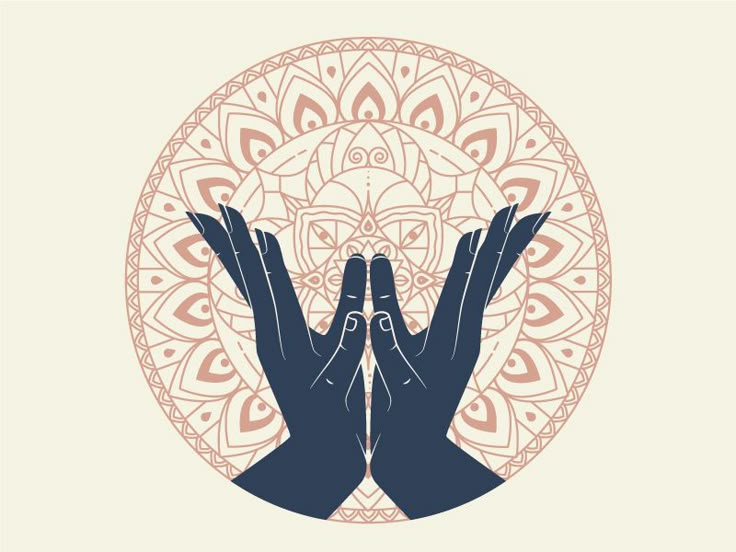
Bring the bases of your palms together — wrists touching. Spread your fingers apart like a blooming lotus flower. Thumbs and little fingers remain connected; the rest open wide.
Hold your hands at heart level. Close your eyes. Breathe slowly.
This mudra activates the energy of the anahata and helps the body “remember” a state of openness. Hold for 3–5 minutes — in silence or with soft music.
One honest word at the end
These practices are real. They can help — especially if done regularly and with genuine attention, not mechanically.
But I want to say something important: working with the anahata is not a quick process. Sometimes the blockage has deep roots — in childhood experiences, in patterns that formed over years. And in those cases, self-guided practices may not be enough — not because you’re doing something wrong, but because some layers require more directed work.
That’s okay. That’s not failure.
If you recognized yourself in several of these signs — that’s already a step. The very fact that you notice it, that it matters to you, speaks to the part of you that is ready for change.
Where to go from here — that’s for you to decide.
If you’d like to learn more about what I work with — visit Sundari Magic. No promises of quick results — only honest practice.
With warmth, Radha ✨
If this article resonated with you — share it with someone who might need it.
Discover more from Sundari Magic | Spiritual Initiations, Energy Empowerments & Mystical Practices
Subscribe to get the latest posts sent to your email.